
October 22, 2026
How Matcha Came to Be: A Short History of Powdered Tea
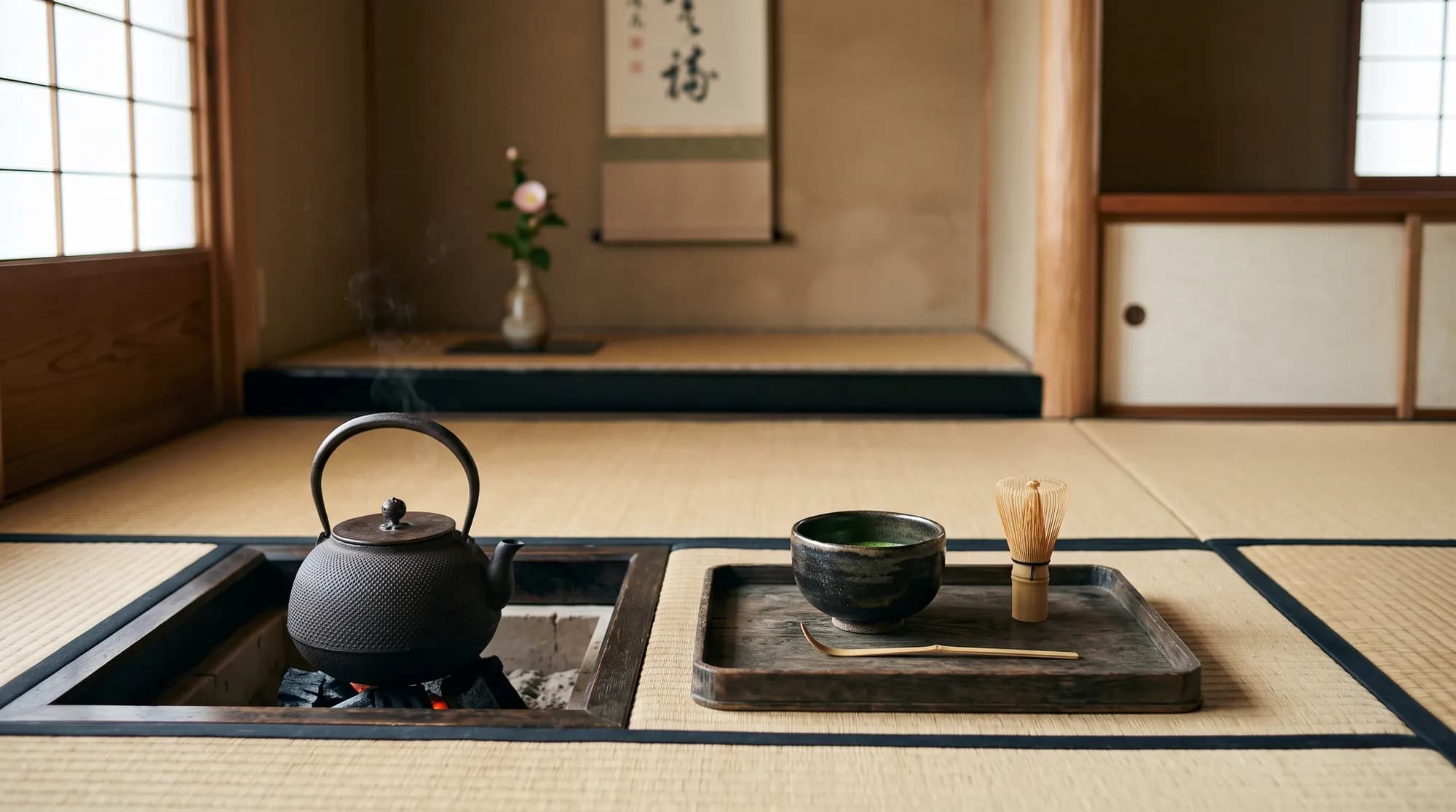
Matcha can look like a drink of the last few years, but powdered tea has a long history. It begins in China, continues in Japanese monasteries and leads to the tea ceremony that is still practised today. This article keeps to what encyclopedias and museum sources confirm, without the pretty legends.
A custom that came from China
Powdered green tea whisked in a bowl with hot water did not appear in Japan out of nowhere. According to the Japan Tourism Agency, the custom came from China at some point between the twelfth and fourteenth centuries. For most of the twelfth and thirteenth centuries China was ruled by the Song dynasty (960–1279), and Japanese Buddhist monks travelled there to study.
The tableware came from China along with the drink. According to the Metropolitan Museum of Art, the first objects prized at Japanese tea gatherings were old Chinese ceramics that had been kept in Japan and handed down for generations.
Eisai and the first Japanese book on tea
The key figure in this story is the monk Eisai (1141–1215). He went to China twice: in 1168, and again from 1187 to 1191. After his return Eisai founded the Rinzai school of Zen in Japan and, as the Encyclopedia of Religion puts it, became the popularizer of tea drinking in the country.
Around 1211 Eisai wrote a treatise, Kissa yōjōki, "Notes on Curative Tea-Drinking", and presented it to the shogun Minamoto no Sanetomo. The text describes tea above all as something good for health. That was how tea was mostly seen at the time: according to the Japan Tourism Agency, from the late twelfth to the early fourteenth century tea was understood primarily as medicine.
This is the view of a medieval author, not medical advice. What is known about matcha's composition today, and what modern studies say about it, we cover in separate articles.
From medicine to gatherings
Eisai did more than spread tea drinking. With the backing of the shoguns he built monasteries where Zen was fostered and worked to have the new teaching accepted. Over time tea stopped being only a medicine and became a reason to meet and be entertained.
Towards the end of this period, tea contests appeared among the upper classes. Guests were served ten, twenty or even a hundred cups and had to guess which held the "genuine" tea from the very first plantation. People bet on the outcome, and hosts tried to impress their guests with expensive Chinese utensils. Gradually, admiring the utensils became part of the gathering itself. The strict order we now call the tea ceremony came later.
Shade and tencha
Matcha's colour and taste have to do with how it is grown. Before harvest the tea bushes are covered against direct sun, for example with bamboo mats. The authors of a scientific review of matcha (Kochman et al., 2020) note that shading makes the leaves accumulate more L-theanine, caffeine and chlorophyll. This is what matcha's bright colour and mild taste are linked to.
The raw material for matcha is called tencha: dried shaded leaves that are then ground into a fine powder. That is what sets matcha apart from brewed green tea: you drink the leaf itself, not an infusion.
Sen no Rikyū and the tea ceremony
The tea ceremony as it is known today took shape in the sixteenth century (Metropolitan Museum of Art). In Japanese it is called chanoyu, literally "hot water for tea". But it is more than drinking tea: matcha is prepared and drunk in a dedicated space following codified procedures, and mastering them takes years.
At first tea gatherings were a pursuit of the elite. Rulers, warriors and wealthy merchants used them to build ties, and old Chinese ceramics were the most valued utensils. In the mid-sixteenth century tea masters, Sen no Rikyū (1522–1591) foremost among them, changed this taste. They began to use plain, rustic vessels from Korea and Japan and to find beauty in uneven, imperfect forms. This aesthetic is called wabi: it values austerity, naturalness and apparent artlessness.
Rikyū served as tea adviser to two of the unifiers of Japan, Oda Nobunaga and Toyotomi Hideyoshi, and is considered the father of the modern way of tea (Japan Tourism Agency). A tea room is usually only large enough for four or five people and is modelled on a hermit's hut. All attention in it goes to the host, the guests and the utensils, and every gathering is unique: the same set of objects and people will never meet again.
Utensils and new ceramics
The objects still used today are familiar from old collections of tea utensils: a fresh-water jar, a portable brazier, the chawan bowl, the bamboo chasen whisk, the bamboo chashaku scoop and small containers for the powder. The tea ceremony even gave rise to new kinds of ceramics. Raku bowls are especially prized: they are shaped by hand rather than thrown on a wheel, and making thin walls of even thickness this way is very difficult (Metropolitan Museum of Art).
Matcha today
Matcha is still used in the tea ceremony, but more often people simply drink it: in a bowl with water, in a latte, or added to desserts and baking. In recent years, as the authors of scientific reviews note, it has become popular far beyond Japan. The essentials have stayed the same: the leaf is ground into powder, and the powder is whisked with water and drunk whole.
Nissei Organic brings matcha made in Japan to Uzbekistan.
Sources
- Japan Tourism Agency, 2019. Tea Ceremony and Ii Family Collection. Japan Tourism Agency Multilingual Explanation Text Database. mlit.go.jp
- Collcutt M., 1987. Eisai. Encyclopedia of Religion (via Encyclopedia.com). encyclopedia.com
- Willmann A., 2011. The Japanese Tea Ceremony. Heilbrunn Timeline of Art History, The Metropolitan Museum of Art. metmuseum.org
- Kochman J. et al., 2020. Health Benefits and Chemical Composition of Matcha Green Tea: A Review. Molecules. PubMed
- Sokary S. et al., 2023. The therapeutic potential of matcha tea: A critical review on human and animal studies. Current Research in Food Science. PubMed