
October 22, 2026
Catechins and EGCG in Matcha: What We Know and What We Don't
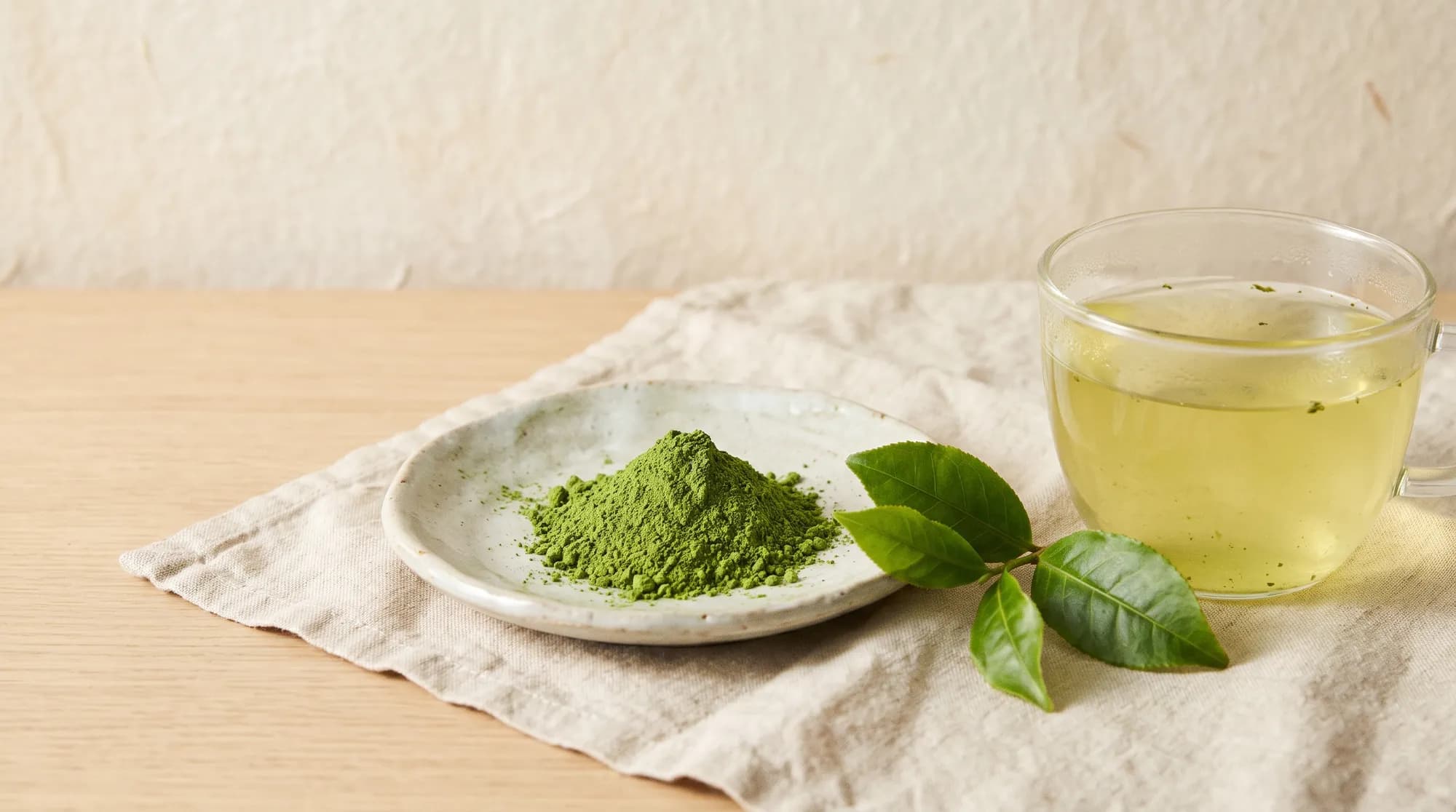
Matcha is often called a superfood, and catechins are usually the reason given. The word sounds convincing, but behind it is a set of specific compounds and some rather mixed evidence. Let's look at what catechins are, why a serving of matcha may contain more of them than brewed tea, what reviews of the research show and where the exaggeration begins.
What catechins are
Catechins are plant polyphenols that tea is rich in. Green tea has four main ones: epicatechin (EC), epicatechin gallate (ECG), epigallocatechin (EGC) and epigallocatechin gallate (EGCG). The last is usually the most abundant and is considered the most active of the four (Kochman et al., 2020). Catechins are also largely behind the astringency of tea.
Why a serving of matcha may contain more
It comes down to how the tea is prepared. When you steep tea, only some of the compounds pass into the water; the rest stay in the leaf and are thrown away with it. Matcha you drink whole, leaf and all.
The best-known study on this is by Weiss and Anderton (2003). Calculating per gram of dry leaf, they found that the EGCG a person gets from matcha was 137 times higher than from one specific brewed tea (China Green Tips) and at least three times higher than the highest literature value for other green teas. This is where the popular line that matcha has "137 times more antioxidants than green tea" comes from. It is inaccurate: the 137 refers to one particular tea, not to green tea in general.
But the picture is mixed
Other studies show that a lot depends on the grade and the method of analysis.
- In a comparison of 15 green teas bought in shops (Meyer et al., 2023), bagged tea and loose-leaf gunpowder tea had a higher total phenolic content and antioxidant activity than matcha. Among the matcha samples themselves, the cheaper culinary grades scored higher on these measures than the ceremonial ones.
- In a comparison of three matcha grades (Toniolo et al., 2025), amino acids and caffeine decreased from the top ceremonial grade to the culinary grade, while polyphenols increased.
- The review by Kochman and colleagues (2020) mentions a study in which matcha had fewer polyphenols than other green teas. One possible reason is the shading of the bushes before harvest.
The honest conclusion: matcha can provide more catechins per cup because you drink the leaf. But it can't be said that any matcha always contains more than any green tea.
What the reviews show
The most reliable evidence on how catechins affect people comes from reviews and meta-analyses of clinical trials. The meta-analysis by Zamani and colleagues (2022) pooled 55 randomised trials in which people took green tea supplements, mostly extracts. On average, participants saw small decreases in total cholesterol, LDL ("bad") cholesterol, fasting blood sugar, glycated haemoglobin and diastolic blood pressure, and a small rise in HDL ("good") cholesterol.
Three caveats matter here. First, these were supplements, not matcha, and their doses are often hard to compare with a cup of tea. Second, the average changes were small. Third, these are laboratory markers, not diseases: studies like these don't show that green tea prevents heart attacks or diabetes.
There is even less evidence on matcha itself. The review by Sokary and colleagues (2023) notes that its effects on metabolism and cardiovascular markers have only been studied in animals, and there is too little human data to draw conclusions.
Antioxidants in a test tube and in the body
Matcha's antioxidant activity is usually measured in a test tube, where it is high. But a test tube is not a body. In a laboratory model of digestion (Koláčková et al., 2022), matcha's antioxidant activity fell by more than 94% after "digestion". This doesn't mean catechins are useless, but it shows that test-tube figures can't be transferred directly to people.
What the research doesn't show
- That matcha treats or prevents any disease.
- That it helps you lose weight, speeds up your metabolism or "flushes out toxins".
- That results from animals or cells hold true for people.
Safety: how much EGCG is a lot
In 2018 EFSA assessed the safety of green tea catechins. Its conclusion for drinks is reassuring: catechins from green tea infusions and similar drinks are generally safe. Supplements are another matter. In studies with volunteers under medical supervision, EGCG doses of 800 mg a day or more from food supplements were associated with a rise in liver enzymes (transaminases) in the blood. EFSA regards this as an initial sign of liver damage. The experts were unable to identify a safe dose for supplements. For comparison, people who drink brewed green tea get on average 90–300 mg of EGCG a day from it.
How much is in matcha? In a 2024 clinical trial, 2.7 g of matcha contained 301.4 mg of all catechins combined (Baba et al.). For a 2 g serving that is about 220 mg of total catechins, of which EGCG is only a part. So one bowl contains several times less EGCG than the 800 mg EFSA refers to. This is a rough estimate: composition depends on the grade and the batch.
The practical takeaways are simple:
- Matcha is a drink, not a supplement. A normal number of bowls looks nothing like the doses at which EFSA sees risks.
- If you take green tea extract supplements, count your matcha too and discuss the doses with your doctor.
- If you have a liver condition or take medicines, ask your doctor how much tea is right for you.
In short
Matcha does contain catechins, and a serving may contain more than brewed tea. Reviews link green tea supplements with small improvements in some metabolic markers, but there is little human data on matcha itself. Drink matcha because you like the taste, not for promises the research doesn't yet support.
Sources
- Kochman J. et al., 2020. Health Benefits and Chemical Composition of Matcha Green Tea: A Review. Molecules. PubMed
- Weiss D. J., Anderton C. R., 2003. Determination of catechins in matcha green tea by micellar electrokinetic chromatography. Journal of Chromatography A. PubMed
- Meyer B. R. et al., 2023. Catechin Composition, Phenolic Content, and Antioxidant Properties of Commercially-Available Bagged, Gunpowder, and Matcha Green Teas. Plant Foods for Human Nutrition. PubMed
- Toniolo C. et al., 2025. A Comparative Multianalytical Approach to the Characterization of Different Grades of Matcha Tea (Camellia sinensis (L.) Kuntze). Plants. PubMed
- Zamani M. et al., 2022. The effects of green tea supplementation on cardiovascular risk factors: A systematic review and meta-analysis. Frontiers in Nutrition. PubMed
- Sokary S. et al., 2023. The therapeutic potential of matcha tea: A critical review on human and animal studies. Current Research in Food Science. PubMed
- Koláčková T. et al., 2022. The Effect of In Vitro Digestion on Matcha Tea (Camellia sinensis) Active Components and Antioxidant Activity. Antioxidants. PubMed
- EFSA Panel on Food Additives and Nutrient Sources added to Food, 2018. Scientific opinion on the safety of green tea catechins. EFSA Journal. DOI
- EFSA, 2018. EFSA assesses safety of green tea catechins (press release). efsa.europa.eu
- Baba Y. et al., 2024. Matcha Does Not Affect Electroencephalography during Sleep but May Enhance Mental Well-Being: A Randomized Placebo-Controlled Clinical Trial. Nutrients. PubMed